The city of Venice occupies a singular place in the history of Western classical music: its architecture and institutions turned the city into a laboratory of acoustic innovation and a crossroads for European stylistic exchange.
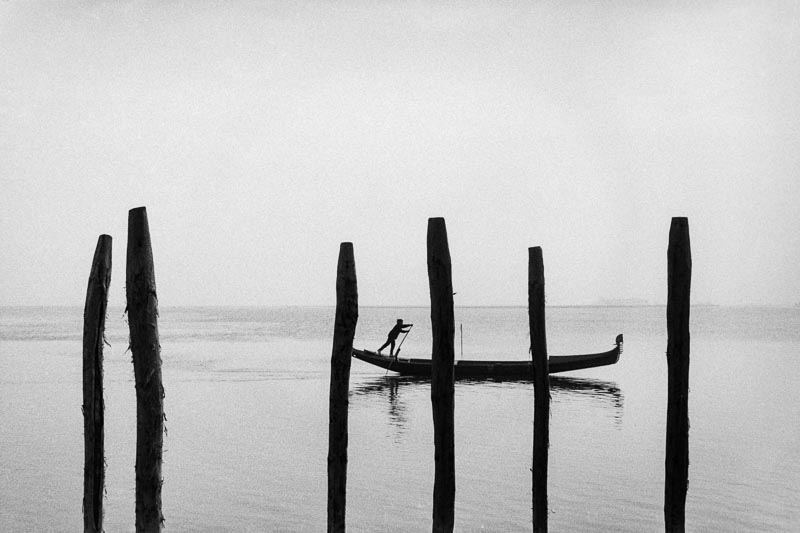
From the sixteenth century to the present, Venetian composers and institutions—churches, ospedali, and theaters—shaped musical practices that favored spatial writing, emotional immediacy, and technological experimentation. This report traces that trajectory across five centuries, showing how lagoon topography and civic resilience fostered recurring cycles of artistic renewal.
The Venetian School and the Polychoral Revolution at St. Mark’s Basilica
The origins of Venice’s distinctive musical identity are inextricably linked to the Basilica di San Marco, a Byzantine edifice whose interior layout directly influenced the composition of sacred music. The emergence of the Venetian School in the mid-sixteenth century represented a significant departure from the intricate polyphony favored by the Roman School and the Franco-Flemish tradition.
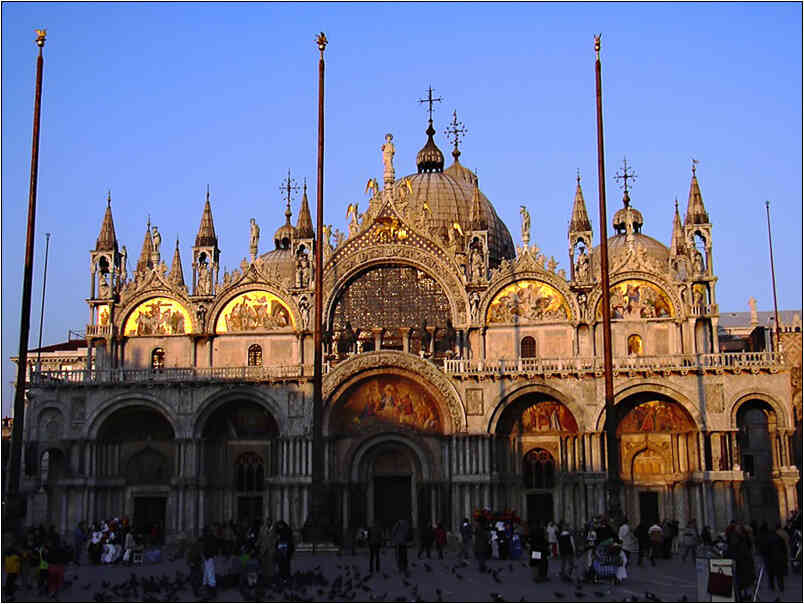
This evolution was driven by both political and architectural factors. Following the death of Pope Leo X in 1521 and the subsequent Sack of Rome in 1527, the Roman musical establishment was eclipsed, prompting many skilled musicians to migrate to Venice, among other cultural centers, which offered a prosperous and stable environment for creativity.
St. Mark’s Basilica, with its multi-domed interior and opposing choir lofts, presented a unique acoustic challenge: a long reverberation time that made complex, overlapping polyphonic lines difficult for listeners to discern. In response, composers developed the Venetian polychoral style, or cori spezzati (broken choirs), which utilized spatially separated groups of singers and instrumentalists. This technique involved antiphonal effects, where two or more choirs would perform in dialogue, creating an immersive sonic experience that reflected the opulence of the Venetian Republic during its peak.
The first composer to bring international fame to this style was Adrian Willaert, a Flemish master appointed maestro di cappella in 1527. Willaert’s influence was profound, as he utilized the church’s architecture to create grand antiphonal works where groups played sometimes in opposition and sometimes together, united by the resonance of the organs and instruments. His teaching legacy ensured that subsequent generations of Venetians would continue to refine this spatial approach to sound.
The Gabrielis and the Peak of Polychorality
The Venetian School reached its developmental peak in the late sixteenth century under the guidance of Andrea Gabrieli and his nephew, Giovanni Gabrieli. Andrea Gabrieli was instrumental in balancing homophonic and polyphonic textures within polychoral works, and his collection Psalmi Davidici (1583) showcased a sophisticated use of spatial arrangements that moved beyond simple call-and-response patterns.
Giovanni Gabrieli, however, pushed these innovations into the realm of what modern listeners might recognize as surround sound. His music was inextricably linked to the sprawling space of St. Mark’s, which he exploited by positioning separate groups of brass players, string players, and singers in different galleries throughout the basilica.
Gabrieli’s Sacrae Symphoniae (1597 and 1615) exemplified the mature Venetian style, incorporating up to 16 separate parts and specifying exact instrumentation—a rarity for the period. He is often credited among the earliest composers to indicate dynamics in print, as in the Sonata pian e forte, where the volume of the music was dictated by the number of performers active in a given space, creating natural echoes and contrasts.
The fame of these performances drew musicians from across the continent to Venice, where they absorbed the Venetian techniques and brought them back to their home countries. This dissemination was facilitated by Venice’s status as a major center for music publishing in the sixteenth century, where composers from northern Europe could benefit from advanced printing technology.
The transition from the musical Renaissance to the Baroque era was thus accelerated by the Venetian School’s focus on monody, instrumental color, and dramatic contrast.
Claudio Monteverdi and the Transition to Baroque
Following the death of Giovanni Gabrieli in 1612, the musical establishment at St. Mark’s entered a brief period of decline until the appointment of Claudio Monteverdi as maestro di cappella in 1613. Monteverdi brought with him the revolutionary concept of the seconda pratica, which prioritized the emotional expression of the text over the rigid rules of traditional counterpoint.
Under Monteverdi’s leadership, the musical forces at St. Mark’s were significantly increased, contributing to a broad revitalization of the city’s sacred music. His Vespro della Beata Vergine (1610), though written before his Venetian tenure, served as a virtual compendium of modern church music styles, combining grand Venetian psalm settings with virtuoso vocal solos and operatic dramatic structures.
Monteverdi’s Venetian years were characterized by an increasing concern with the expression of human emotions—love, war, and calmness—which he codified into a practical philosophy of music that utilized new instrumental techniques like the tremolo and pizzicato to simulate the clashing of swords or the trembling of the heart.
The socio-economic landscape of Venice also allowed for the successful commercialization of music. In 1637, the opening of the Teatro di San Cassiano marked the beginning of public opera, where fees were charged for attendance, a stark contrast to the private courtly performances of other Italian states. This commercial shift ensured that Venice remained the operatic capital of the world for the remainder of the seventeenth century.
The Baroque Era: Vivaldi and the Ospedali Grandi
In the eighteenth century, Venice’s musical reputation was maintained not only by the church and public theaters but also by its charitable institutions, specifically the four Ospedali Grandi: the Pietà, the Incurabili, the Mendicanti, and the Ospedaletto. These foundations were originally established as hospices for the needy and abandoned, but by the seventeenth century, they had transformed into elite music schools for girls.
The Ospedale della Pietà was the most famous of these institutions, largely due to its long association with Antonio Vivaldi. Vivaldi was appointed maestro di violino in 1703 and served intermittently in various capacities until 1740, including roles as maestro di viola all’inglese and maestro dei concerti. His duties were extensive, encompassing the teaching of music to the young women, the maintenance of instruments, the conducting of ensembles, and the composition of a vast repertoire of sacred and instrumental works.
The students were divided into two groups: the “figlie di comun”, who learned domestic trades, and the “figlie di choro”, a select group of several dozen musically gifted girls who received a rigorous education and performed in the institution’s internationally renowned concerts. These concerts became a major attraction for travelers on the Grand Tour, including notable figures like Jean-Jacques Rousseau, who praised the girls as models of genuine musical taste.
Vivaldi’s collaboration with the figlie di choro was a pivotal factor in his prolific output. He wrote hundreds of concertos specifically tailored to the capabilities of his students, often using the compositions as pedagogical tools to help the young women master their instruments.
Some students achieved such international renown that listeners considered them among the greatest violinists of their generation. The performances at the Pietà were unique in their stability; because the women were cloistered and often remained in the institution for their entire lives, they had ample rehearsal time to build extraordinary ensemble skills.
19th Century Opera and the Importance of La Fenice
The nineteenth century in Venice was dominated by the Gran Teatro La Fenice, an opera house that opened in 1792 and quickly became a symbol of the city’s resilience. The theater was named “The Phoenix” because it was built to replace the Teatro San Benedetto, which had burned down in 1774, signifying the company’s ability to rise from the ashes.
La Fenice was a venue for the world’s most prestigious operatic debuts, hosting the major bel canto composers—Rossini, Bellini, and Donizetti—before becoming the primary stage for Giuseppe Verdi’s middle-period masterpieces. Verdi’s relationship with La Fenice was professional and intense, leading to five world premieres between 1844 and 1857, including Rigoletto (1851) and La traviata (1853).
The premiere of La traviata on March 6, 1853, is one of the most significant events in Venetian operatic history, primarily due to its initial reception as a disaster. Based on Alexandre Dumas’s La Dame aux Camélias, the opera presented a modern tragedy centered on a Parisian courtesan, Violetta. Verdi and his librettist, Francesco Maria Piave, intended for the opera to have a contemporary setting, but the authorities at La Fenice insisted it be set in the past, around the year 1700, to avoid social scandal.
The opening night was a fiasco for several reasons. Audience members mocked the casting of Fanny Salvini-Donatelli as the frail, dying Violetta, finding her physical stature unrealistic for the role. Verdi, deeply dissatisfied, withdrew the work from circulation until he could find a cast that would guarantee its success.
A year later, on May 6, 1854, a revised version of the opera was staged at Venice’s Teatro San Benedetto with a more suitable cast. This production was a resounding success and cemented La traviata’s place in the permanent repertoire.
The 20th Century and Modernity: Stravinsky and Nono
Venice in the twentieth century transitioned from a center of romantic opera to a hub for the international avant-garde. This shift was largely driven by the Venice Biennale Musica and the personal attachments of major composers to the city. Igor Stravinsky and Luigi Nono represent the two poles of this era: the cosmopolitan neoclassicist and the native radical.
Igor Stravinsky maintained a lifelong love for Venice, which he visited frequently and chose as the site for several major premieres. In 1951, La Fenice hosted the premiere of his neoclassical opera The Rake’s Progress, which Stravinsky himself conducted.
His connection to the city was so deep that he requested to be buried there. Following his death in New York in 1971, his body was transported to Venice for a funeral service at the Basilica of San Zanipolo. His coffin was carried by a flotilla of gondolas to the island cemetery of San Michele, where he was interred in the Orthodox section, near his early mentor Serge Diaghilev.
Unlike Stravinsky, Luigi Nono was born in Venice and spent his life exploring the city’s unique “acoustic multiverse”—the resonant silences and spatial soundscapes that he believed were inseparable from his Venetian identity.
His most ambitious work, Prometeo, Tragedia dell’ascolto (1984), was conceived in direct dialogue with Venetian history. Nono chose the deconsecrated church of San Lorenzo for the premiere because he discovered that the space had historically been used for music in cori spezzati.
For the performance, architect Renzo Piano designed a massive wooden “ark” or “sounding-board” that seated the audience in the center while the musicians and loudspeakers were positioned in galleries around them, recreating the spatial effects of the Renaissance.
Nono died in 1990 and is also buried at San Michele, his grave marked by a minimalist stone that reflects the calm yet disruptive impact of his music.
The Recurring Tragedies of La Fenice and the 1996 Fire
The narrative of La Fenice is defined by its ability to recover from devastation. While the theater suffered major fires in 1774 and 1836, the most traumatic event in its modern history was the arson of January 29, 1996. During a period of closure for restoration, two electricians set the building on fire to avoid penalties for their work delays. The fire destroyed the interior’s ornate gold leaf and wood carvings, leaving only the exterior walls standing.
The reconstruction was a massive “philological” undertaking based on the motto “com’era, dov’era” (as it was, where it was). Led by architect Aldo Rossi, the team used historical photographs and scenes from Luchino Visconti’s 1954 film Senso to meticulously recreate the nineteenth-century décor. The reconstruction cost around ninety million euros and involved a team of 200 craftsmen who prioritized the use of wood to ensure the best acoustic response. The theater reopened in 2003 with an inaugural concert, and fully resumed opera production with La traviata in 2004.
The Atmospheric Soundtrack: Piazza San Marco and its Orchestras
For the traveler, the most immediate musical experience in Venice is the “atmospheric soundtrack” provided by the outdoor orchestras in Piazza San Marco. This tradition of live music dates back to the eighteenth century and is centered around three iconic cafés: Florian, Quadri, and Lavena.
Caffè Florian, established in 1720, is the oldest coffee house in continuous operation in Italy. In the early twentieth century, it introduced the traditional “café-concert” with a permanent orchestra that performs romanzas, opera pieces, and modern hits. Across the square, Gran Caffè Quadri (founded 1775) maintains a similarly historic ambiance, having hosted celebrities ranging from Lord Byron to Woody Allen. Caffè Lavena (founded 1750) is particularly noted for its association with Richard Wagner, who was a frequent guest and composed parts of Parsifal at its tables.
These orchestras perform in small pavilions, often engaging in friendly competition across the square. For tourists, sitting at these tables with live music and a view of the Basilica remains a quintessential Venetian experience that connects the modern city to its luxurious past. The cost of the music surcharge for outdoor seating is widely considered a necessary investment for experiencing the “most beautiful living room in the world”.
Conclusion: the Permanence of Venetian Musical Identity
The musical history of Venice is a testament to the relationship between art and environment. The city’s architecture created the need for polychoral dialogue; its charitable institutions fostered instrumental virtuosity; and its theaters, despite repeated destruction, remained the center of operatic drama. From the brass fanfares of Gabrieli to the electronic labyrinths of Nono, Venice has consistently redefined the limits of sound and space. The resilience of La Fenice and the continued tradition of the San Marco orchestras ensure that Venice remains not just a museum of musical history, but a living sanctuary for the resonance of the lagoon.`